
- Home
- Services and Areas
- What is an FPV drone
Guide · FPV
What is an FPV drone? How it differs from standard drone filming
The short answer to the question of what an FPV drone is: it is the type of drone a pilot flies while wearing goggles, watching the picture from the aircraft's camera from a first-person viewpoint. FPV stands for first person view. Where a standard drone gives steady, stable landscape footage, an FPV drone comes in through the door, passes down the corridor, glides over the pool and takes you round an entire venue in one unbroken shot. In this guide we explain the difference between the two aircraft, where FPV works and where it does not, and how an FPV shoot is planned.
What does FPV mean, and how is it flown?
The pilot of a standard drone watches the aircraft from the ground and follows the picture on the screen of the controller. The aircraft keeps itself stable, and when you let go of the sticks it hovers in the air. With FPV, the pilot puts on a pair of goggles and sees the live picture from the camera on the front of the aircraft. It feels almost like sitting inside it.
FPV aircraft are mostly controlled entirely by hand, without stabilisation assistance. That is what makes sharp turns, dives and passes through narrow gaps possible. For the same reason they are hard to fly. Pilots spend a long time practising on simulator software before flying for real.
The differences between a standard drone and FPV
- Movement: a standard drone is slow, smooth and stable. FPV is fast, fluid and free in three dimensions.
- Visual language: a standard drone shows the wide landscape and the location. FPV takes the viewer inside the venue.
- Proximity: a standard drone keeps its distance from objects. Small FPV aircraft can pass through a door, a window or between the branches of a tree.
- Interiors: a standard drone has limited use in enclosed spaces. Small FPV aircraft with propeller guards are designed for interiors.
- Flight time: FPV batteries do not last long, so filming is done in short runs.
- Sound: FPV aircraft are noisy, so the ambient sound from the shoot is not used and the sound is designed afterwards.
- Piloting: FPV calls for a separate skill and a separate rehearsal process.
Types of FPV aircraft
No single FPV aircraft does every job. For interior tours, light aircraft the size of the palm of a hand, with guarded propellers, are used. These are safer for flying close to people and objects, and they carry a small action camera.
For scenes in the open that need speed and power, for example following a vehicle or diving down a hillside, larger and more powerful aircraft are preferred. There are also heavy FPV platforms that can carry a cinema camera for commercials, but these require a larger crew and a wider safety area. Which aircraft is used is chosen according to the venue to be filmed and the footage wanted.
Where does FPV make a difference?
What they have in common is this: FPV shows how the parts of a venue connect to one another. Photography and conventional video tell that story piece by piece, while FPV tells it by taking the viewer on a walk through.
- Hotel tour: a presentation that passes from the lobby to the restaurant and from the pool to the beach in one take.
- Restaurant, beach club and café: footage that flows from the kitchen to the dining room and out onto the terrace.
- Villa and property: a tour that comes in through the garden gate, moves through the rooms and goes out from the balcony to the view.
- Factory and plant: following the production line from start to finish.
- Automotive and motorsport: tracking a moving vehicle from close by.
- Venues with many sections, such as a water park, a gym or a spa.
- An eye-catching opening shot for launch and promotional videos.
How is a one-take venue tour planned?
Recce
The venue is walked from end to end with the pilot. Door widths, ceiling heights, chandeliers, glass surfaces and narrow passages are noted.
Route
Where the tour will start and end, and the order in which it will proceed, are decided. A good route follows the natural order in which a guest would walk round the venue.
Staging
What will be seen at each point along the route is planned: a member of staff welcoming at reception, a drink being prepared at the bar, sunloungers by the pool.
Choosing the time
The hour when the light is best and the areas are quietest is chosen. Early morning is preferred most of the time.
Preparing the areas
Doors are fixed open, the areas along the route are temporarily cleared and the people who will appear are briefed.
Rehearsal and filming
The pilot flies the route first slowly, then several times at full speed. Because it is a single take, a small mistake means repeating the run.
Edit and sound
The best run is selected, the footage is stabilised, the colour is graded, and sound design and music to suit the setting are added.
Safety, permits and limits
FPV filming is not done at every venue or in every condition. We do not fly over areas where people gather, and the people who will appear in shot during the tour have been briefed in advance and positioned off the route. In areas with valuable chandeliers, works of art or fragile decor, the route is changed accordingly.
Flights in the open air are subject to the rules on unmanned aircraft. In Türkiye these rules are set by SHGM, the civil aviation authority. Commercial filming requires a licensed pilot and a registered aircraft, and some zones are closed or subject to permission. We check the airspace before every shoot. The information here is general in nature and is no substitute for legal advice; please verify the current regulations in SHGM's official publications.
When is FPV not the right choice?
Like every fine piece of technology, FPV is effective when used in the right place. For a boutique hotel that wants to convey a calm, peaceful atmosphere, a fast FPV tour may give the wrong feeling. At a property like that, slow camera movements and static wide shots are more fitting.
In a single small space, a one-room shop for instance, there is not enough to tour and the run is over in a few seconds. At venues that are very crowded and cannot be cleared, no safe route can be set. In windy weather small aircraft are blown about. In these cases filming with a standard drone or a ground camera gives a better result. A good team will tell you plainly when FPV is not suitable.
Using the two together
In many promotional films the best result comes from using the two aircraft together. The standard drone provides the opening shot that shows where the property sits in relation to the sea, the mountains or the town. FPV then brings the viewer inside and shows them round. The ground camera, in turn, captures faces, details and emotion.
On our hotel shoots we generally plan all three for the same visit. The FPV tour can be published as a video in its own right, and parts of it can also be used as transition shots within the main promotional film.
From our real projects
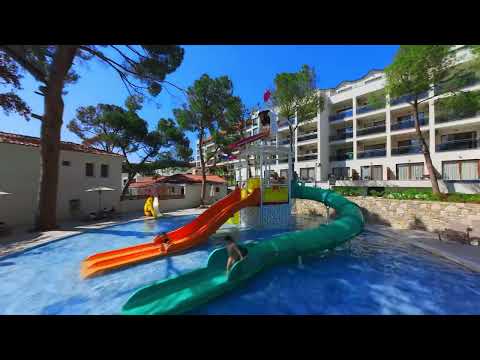
The videos below are published on our YouTube channel. Click to watch.


Frequently asked questions
Is an FPV drone safe indoors?
Small aircraft with guarded propellers are designed for interiors and, with the right planning, are used safely. Even so, the route is walked in advance, the area is cleared and the aircraft does not pass close to fragile objects. Where a risk is spotted, the route is changed.
Why does FPV footage look so fluid?
The action camera on the aircraft records at a wide angle, and the footage is stabilised by software after the shoot. When the smooth steering the pilot does by hand is combined with that stabilisation, the result is one continuous, flowing movement.
Is a one-take tour really filmed in a single go?
That is the aim, and on most tours it is achieved. On very long routes, or at venues that exceed the battery life, two parts can be joined by planning hidden transition points the viewer will not notice.
How long does an FPV shoot take?
The flight itself lasts a few minutes, but with the recce, the route rehearsal, preparing the areas and the repeat runs, it mostly needs half a day of work. At large properties, preparation starts the day before.
Can photographs be taken with FPV?
FPV aircraft are designed for video and are not suited to photography. If aerial photographs are needed, a standard camera drone is used. The two aircraft can be planned together for the same shoot day.
How can I tell whether an FPV tour would suit my own business?
If your venue is made up of several connected sections and you want to show them in one sweep, it is very probably suitable. If you send a floor plan of the venue or a short phone video, we can assess its suitability together.
Let's talk about your project.
Tell us briefly what you have in mind and we will come back with a plan that fits.