
- Home
- Services and Areas
- FPV Drone Hotel Tour
FPV Drone · Hotels
FPV Drone Hotel Tour
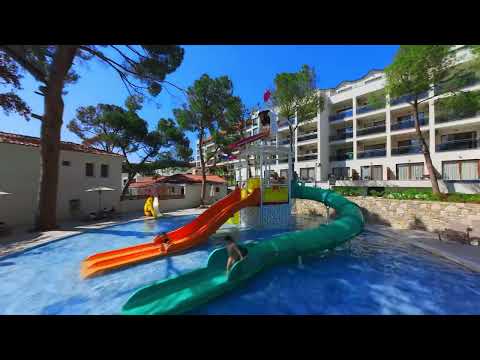
An FPV drone hotel tour is a video filmed in one continuous, uninterrupted flight, from the hotel entrance to the rooms and from the pool to the beach. The viewer feels as if they are really walking through the hotel. Below you can watch the single-take FPV tours we filmed for Prestige Hotel, Ömer Prime Resort and Viking Garden Hotel.
How is a single-take FPV shoot planned?
- Route: we decide which door the flight enters through and which areas it passes
- Rehearsal: the route is flown several times while the area is empty
- Preparation: doors, lights, the pool and service areas are made ready for filming
- Staff and guests: people along the route are informed in advance
- Filming: usually several attempts are made and the best flight is chosen
- Delivery with colour grading and music
Why is an FPV tour effective?
A conventional promotional film is an edit of many short shots. An FPV tour, by contrast, links the spaces together and shows the hotel's layout and scale in one go. Fast and full of movement, it is very well suited to viewing on social media. Used alongside a cinematic promotional film, the two complement each other.
What does a one-take flight show?
A one-take tour has no cuts; viewers see everything the camera sees in its real order. It is a direct way to explain a hotel's layout. How far the lobby is from the pool, how close the restaurant is to the beach, what you see from the room's balcony: all of it becomes clear on its own.
That is why we build the route around the hotel's strengths. The flight opens like a story, the pace builds, and it usually ends on a shot that opens out to the sea, the view or the sunset. If a corridor on the route risks feeling dull, it is either shortened or given a small moment of movement: a door swinging open, a waiter passing by.
Choreography: the drone and people moving together
What brings an FPV tour to life are the small scenes along the route: a receptionist welcoming someone, a person diving into the pool, a drink being made at the bar, a plate placed on a table. Each of these has to happen with split-second timing. The action should start as the drone approaches and be complete as it passes.
We give everyone on the route a position and a cue. Staff who open doors, switch on lights and keep the water surface calm are assigned in advance. People who appear in the scenes are chosen from staff or consenting volunteers, and we run through it with them several times during rehearsal.
The simpler the choreography, the fewer takes it needs. That is why we suggest keeping each scene to one or two simple actions.
Route scouting and rehearsal
Before the shoot we walk the route and note narrow passages, low ceilings, glass surfaces and mirrors. Glass and mirrors need care for both the flight and the image: the drone can appear in a reflection, or distance can be misjudged. Dense wireless networks and metal structures inside the building can also affect the video link.
Then we run test flights while the area is empty. The pilot memorises every turn and change in height, and the route's duration is matched to battery capacity. If the route does not fit into a single flight, sections may need to be joined with transitions viewers will not notice; we discuss this openly from the start.
You can watch the rehearsal takes with us on site and decide whether you want any route changes before the actual shoot.
Safety around guests
An FPV drone is small and agile, but it is still an aircraft with propellers. We schedule the flight for times when there are few guests around and take control of the route for a short period. Crew members are stationed along the route, and if someone unexpected enters the area, the flight is stopped.
We do not fly over crowds or through areas where children are playing. Everyone who appears on camera must have been placed on the route and briefed beforehand. We agree shooting times, areas to close off and guest announcements with hotel management. For outdoor sections, flight permission and local restrictions are checked separately for each location.
A spotter stays next to the pilot and follows the drone by eye. Battery and signal are checked before every attempt.
FPV or a classic drone?
The two do different jobs. FPV shows how spaces connect to each other; a classic drone is strong for wide, calm, high shots.
For many hotels, using both gives a balanced result: the classic drone places the hotel in its setting, and FPV invites the viewer inside.
- FPV suits you if you want a tour that moves through the hotel, a dynamic social media video, or to show how close the areas are to each other
- A classic drone suits you if the location, size and coastline need explaining, or if you want a slow, calm pace
- FPV may not be the right choice in very narrow or constantly busy areas, at times when propeller noise would disturb guests, or in open areas with strong wind
Asking for an FPV tour quote
We design the route, but you know your property more closely than anyone. This information helps us draft a first version:
With this we prepare a draft route and, if needed, finalise the quote after a site visit.
The draft route shows which areas will be covered in what order and where scenes will be staged; once you approve it, we schedule the rehearsal day.
- A site plan of the property, or a simple hand-drawn sketch
- The areas that must appear in the tour, in order of priority
- Where the video will be used: social media, website, ads
- Hours that can be set aside for indoor filming, and sections that can be closed off temporarily
- Whether the tour will be filmed on its own or on the same days as a promotional film
From our real projects
The videos below are published on our YouTube channel. Click to watch.


How we work
Introduction and goals
We talk about your business, your customers and what you want to achieve in this period.
Plan and proposal
We set out in a written plan which channel, which content and which budget will work.
Production and launch
We handle the filming, design, website or ad setup and go live with your approval.
Measurement and reporting
We report results regularly, scale up what works and change what does not.
Frequently asked questions
Is an FPV drone safe indoors?
An FPV drone is small and has protective guards. Even so, we film while the area is cleared or under control; staff and guests along the route are informed in advance.
How many minutes does a single-take tour last?
It depends on the route. Our example tours run from roughly 2.5 to 7 minutes. Short clips can also be prepared for social media.
Can we have only an FPV tour filmed?
Yes. You can take the FPV tour on its own or plan it for the same shooting day as a cinematic promotional film.
What happens if something goes wrong during the flight?
If something unexpected happens on the route, the pilot stops the flight, that section is rehearsed again and the flight starts over from the beginning. That is why we allow time for several attempts on the shoot day.
Can the tour go inside the rooms?
Yes, an empty, prepared room can be added to the route. Moves that exit through the balcony door and open onto the view are common. The room needs to be empty at the time of filming, with doors kept open.
Do we need to empty the hotel for the shoot?
No. Only the sections the route passes through are controlled for a short time. Scheduling the shoot for early morning reduces this need further.
Will we hear the drone in the tour?
No. The FPV drone's own sound is too intrusive to use, so the audio is designed separately in the edit. Ambient sounds such as water, footsteps and the kitchen can be layered with the music to make the tour feel real.
Let's talk about your project.
Tell us briefly what you have in mind and we will come back with a plan that fits.